
A Landmark Shift in NHS Transparency
NHS League Tables 2025 are set to transform how patients evaluate healthcare quality. The UK Government’s new rankings show how trusts and potentially GP practices compare on key performance measures.
The new tables apply not only to acute (hospital) trusts, but also to mental health, community, and ambulance trusts, making performance more transparent across the full range of NHS providers.
Trusts are now ranked from Segment 1 (top-performing) to Segment 4 (most challenged), based on factors such as:
- A&E waiting times
- Access to elective surgery
- Mental health service provision
- Community and ambulance service performance
- Financial sustainability
High-performing trusts gain more autonomy and the ability to reinvest in frontline services, while underperforming trusts face stricter oversight and leadership accountability. The data will be updated quarterly, and from summer 2026 it will also apply to Integrated Care Boards (ICBs).
Which Trusts Are on Top?
The first NHS league tables 2025 highlight some of the NHS’s highest-performing organisations.
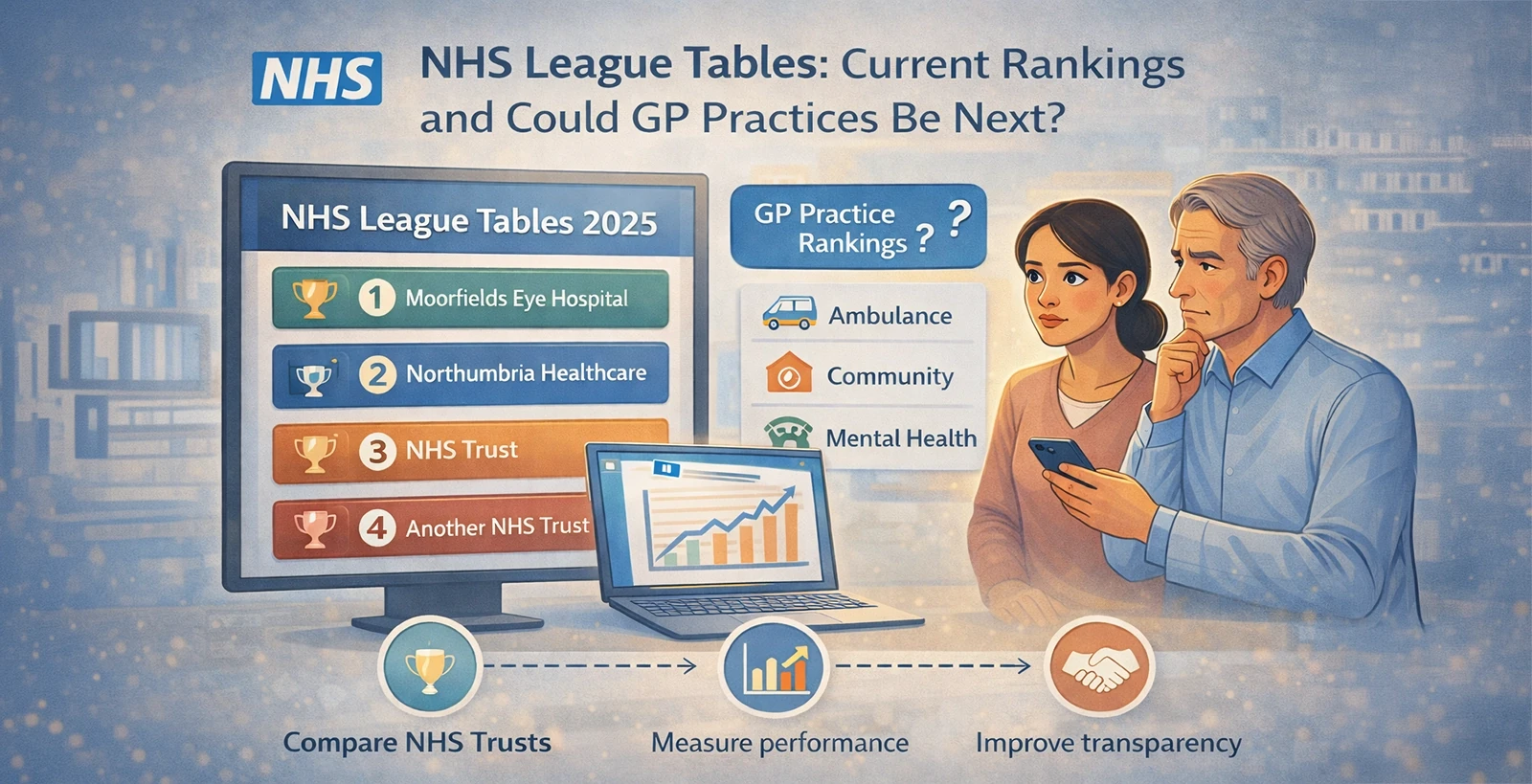
Moorfields Eye Hospital in London takes the top spot among acute trusts—a specialist centre with a long reputation for excellence in eye care.
Northumbria Healthcare NHS Foundation Trust is ranked as the strongest non-specialist provider, with results showing 91% of A&E patients seen within four hours and a £30.5m financial surplus.
These achievements show what’s possible with strong leadership, innovation, and careful use of resources. But while high rankings are a sign of success, they don’t automatically tell patients what their own day-to-day experience of care will feel like. A trust can score highly overall, while individuals may still face long waits or challenges accessing certain services.
What This Means for Patients
NHS leaders position the new league tables as tools of fairness and accountability: helping patients compare local services, recognising high performers, spotlighting underperformers, and countering the postcode lottery.
While the rankings do include some inpatient satisfaction survey data, these measures are limited. The league tables lean far more heavily on hard data such as elective wait times, safety indicators, workforce levels, and financial health, factors that don’t always capture the personal side of care.
Everyday situations might look like this:
- A mother arriving at A&E just wants doctors and nurses available that night—even if her trust scores well on access targets.
- Someone waiting months for physiotherapy may not feel reassured by their trust’s healthy finances if they still can’t get treatment locally.
- Families comparing rankings may wonder: does a better score mean faster diagnosis, or just more efficient reporting?
So, while transparency with the new NHS league tables 2025 is a step forward, the true test is whether these tables help people feel more informed and empowered or whether they raise new questions about what the data really shows, and what it leaves out.
The Big Question: Will GP Practices Be Next?
It’s a natural question. If hospitals are being ranked, could GP practices follow?
Not part of the current plan: The government’s league tables currently apply only to hospital trusts and ambulance services. GP practices are not included.
Past proposals: Back in 2021, there was talk of ranking GP surgeries by the number of face-to-face appointments, but the idea was dropped after strong pushback from doctors’ groups and patient advocates.
Future possibility: While the new 10-Year Health Plan promises more transparency, the focus for GP practices right now is on improving access, digital booking systems, and infrastructure rather than creating performance tables.
So, while it’s not on the immediate horizon, it’s possible we could see some form of practice-level reporting evolve in the coming years, especially as patient demand for transparency grows.
Looking Ahead
The NHS league tables mark one of the most significant reforms in recent years. They’re designed to make performance more visible, reward excellence, and give extra support where services are struggling.
What’s less certain is how far this approach will spread. GP practices aren’t included in the new system, but with ongoing concerns about access to appointments and pressures on local services, it’s easy to imagine calls for greater transparency in primary care too.
The open question is whether league-style rankings would genuinely help patients understand and improve their experience with GPs or whether they would risk oversimplifying the very real challenges those practices face.