
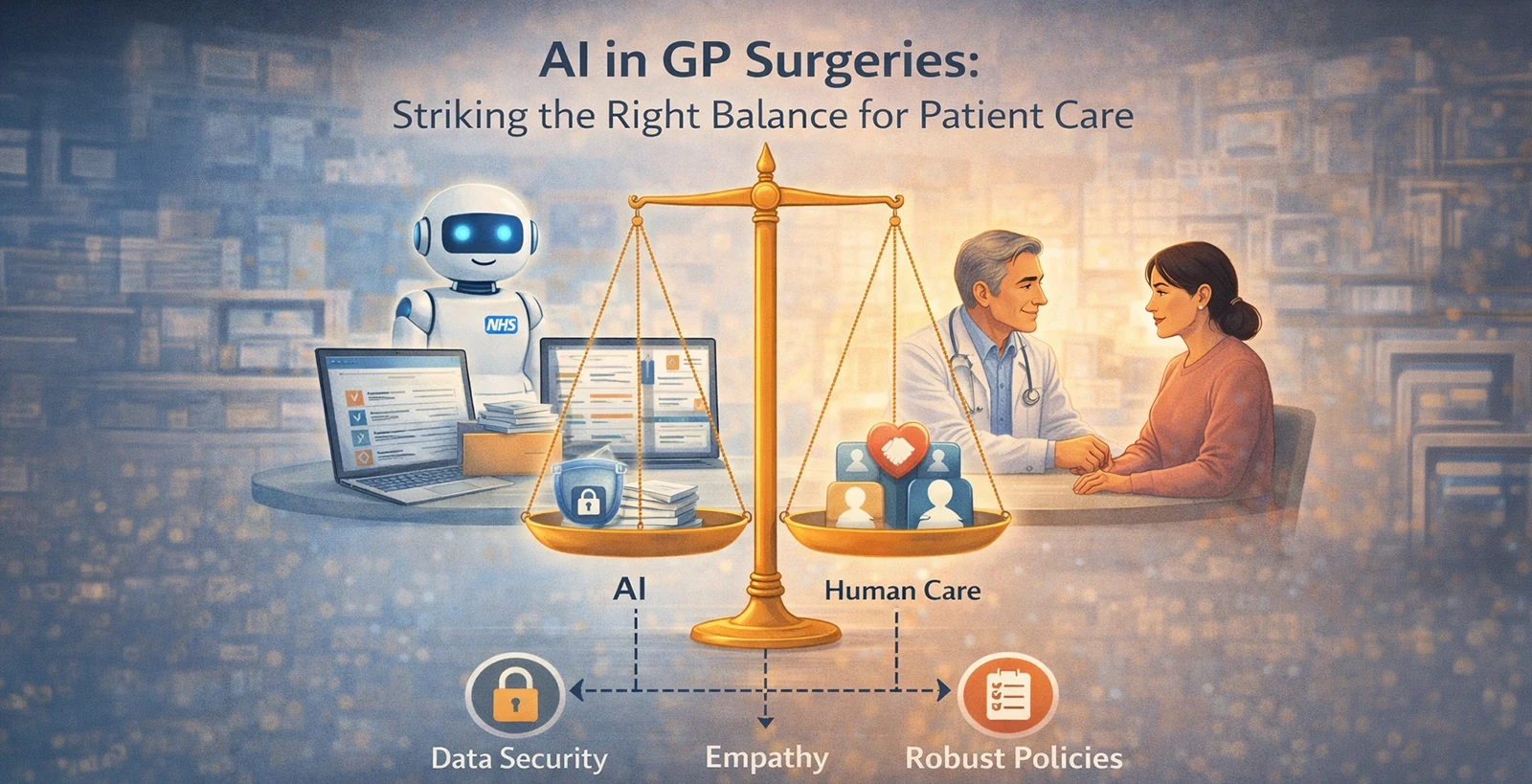
AI in GP surgeries is no longer a futuristic concept—it is already reshaping how practices across the UK work. From streamlining administrative processes to generating policies, AI tools are helping practices manage increasing demand.
But alongside these benefits come legitimate concerns: how is sensitive patient data being handled? Can automated responses really provide the empathy patients need? And are AI-generated policies robust enough to withstand regulatory scrutiny?
This article explores the opportunities and risks, and why balance is essential in adopting AI in general practice.
Cutting Through the Admin Burden
GP practices are under pressure, and much of that pressure comes from repetitive admin. AI can quickly review incoming complaints, sort routine queries, and even draft policy documents. This helps practice managers and admin teams focus their time where it matters most.
For example, AI tools can analyse large amounts of data in seconds, spotting common issues or drafting template responses. Used carefully, this reduces delays and ensures consistent processes.
AI and the Human Touch
However, efficiency is not the same as understanding. Patients who raise complaints often want empathy and reassurance as much as resolution. An AI-generated letter may hit the right notes technically but still feel cold or insincere.
Medical defence organisations have warned that over-reliance on AI in this area could worsen complaints rather than resolve them. A human touch remains essential to rebuild trust, particularly when issues are sensitive or emotionally charged.
Data Security and Patient Privacy
Another major consideration is how patient information is managed when using AI systems. Many tools require access to personal data, which could include details from medical records or complaint correspondence.
Where that data is stored, whether in the UK, abroad, or on third-party servers, matters hugely. Practices must ensure that suppliers meet strict NHS data protection standards. According to NHS England’s digital and data strategy, AI and digital tools will play an increasing role in general practice, making secure data handling even more critical.
Due diligence is key: practices should ask where data is processed, who has access, and how long it is stored. Without this scrutiny, there is a real risk of undermining patient confidentiality.
AI in Policy Creation
It is not just complaints where AI is making an appearance. Some practices now use AI to generate policy documents. While this can save time, policies written solely by AI may miss the nuance of UK healthcare law and regulation.
Policies must take into account not just procedures but also ethical standards, safeguarding, and local compliance frameworks. AI can certainly assist in drafting, but final approval should always rest with qualified staff who understand the wider implications.
Augmenting, Not Replacing Humans
The lesson is clear: AI can be a valuable tool in general practice, but it should not replace human judgement. Technology can speed up complaint handling, improve admin workflows, and support consistency, but empathy, care, and professional oversight remain irreplaceable.
When patients interact with their surgery — whether by phone, online form, or through a well-designed practice website — they want to feel heard and understood. AI can support that process but should never substitute the human connection at the heart of general practice.
The Way Forward: A Balanced Approach
AI is here to stay, and its role in healthcare will only grow. The challenge for GP surgeries is to adopt it responsibly, using it to improve efficiency while safeguarding patient trust, data security, and compliance.
The future of AI in GP surgeries is not about machines replacing people. It is about using AI as an assistant that enhances the work of clinicians and practice staff, freeing up more time for direct patient care.
By striking the right balance, GP surgeries can ensure AI strengthens, rather than undermines, the values of patient-centred care.