The Accessible Information Standard Is About People, Not a Page Full of PDFs
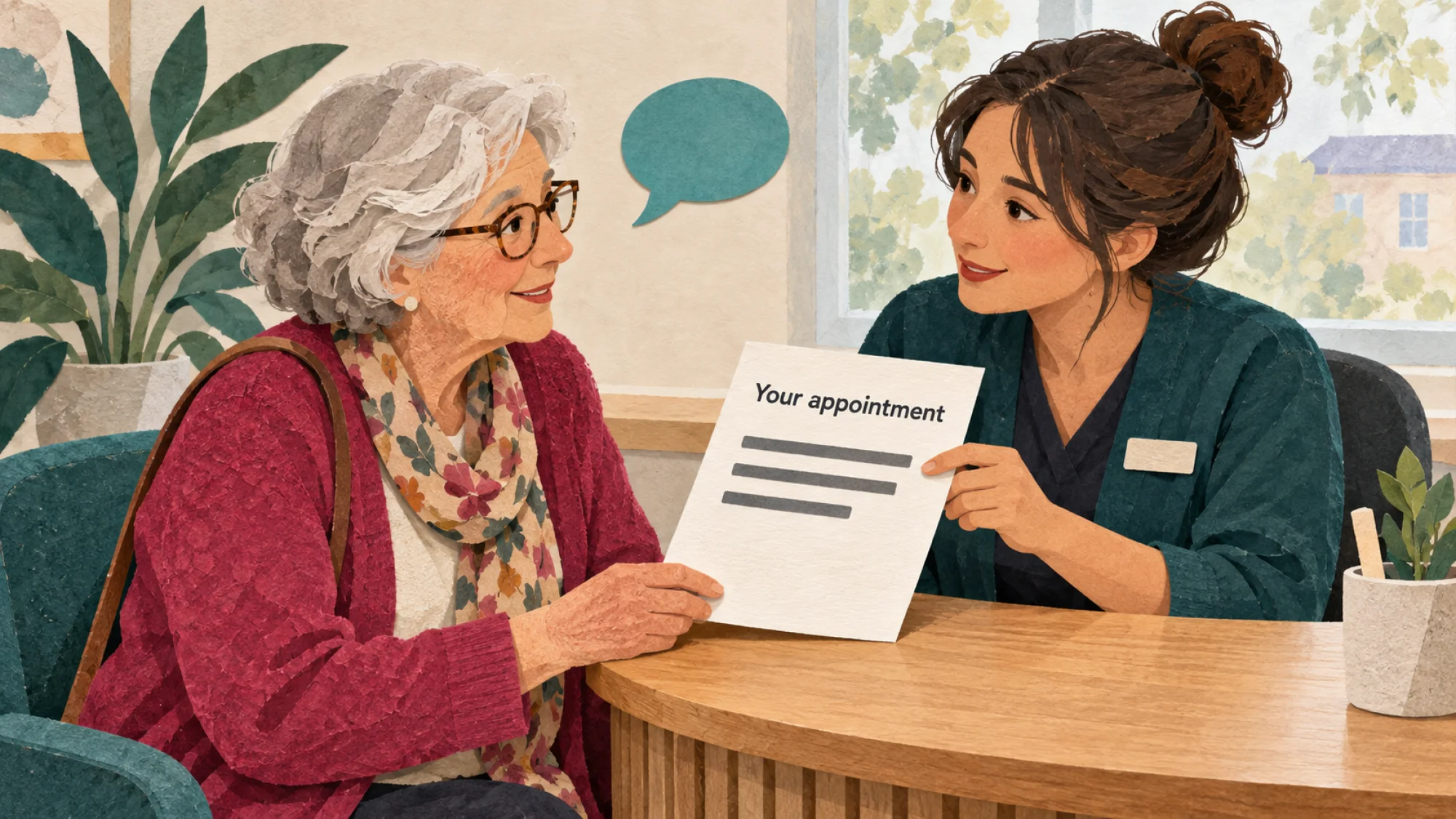
Does meeting the Accessible Information Standard mean adding more PDFs to your GP website? What practices actually need to do, and where website accessibility fits.

A TVD reading guide Accessibility & Inclusion
A patient should not have to struggle to read your information or find their next step. Start with the barriers on your website, then make accessibility part of the way your team writes and updates it.
Find your starting pointStart with your question
Open a question for a short answer and a useful article.
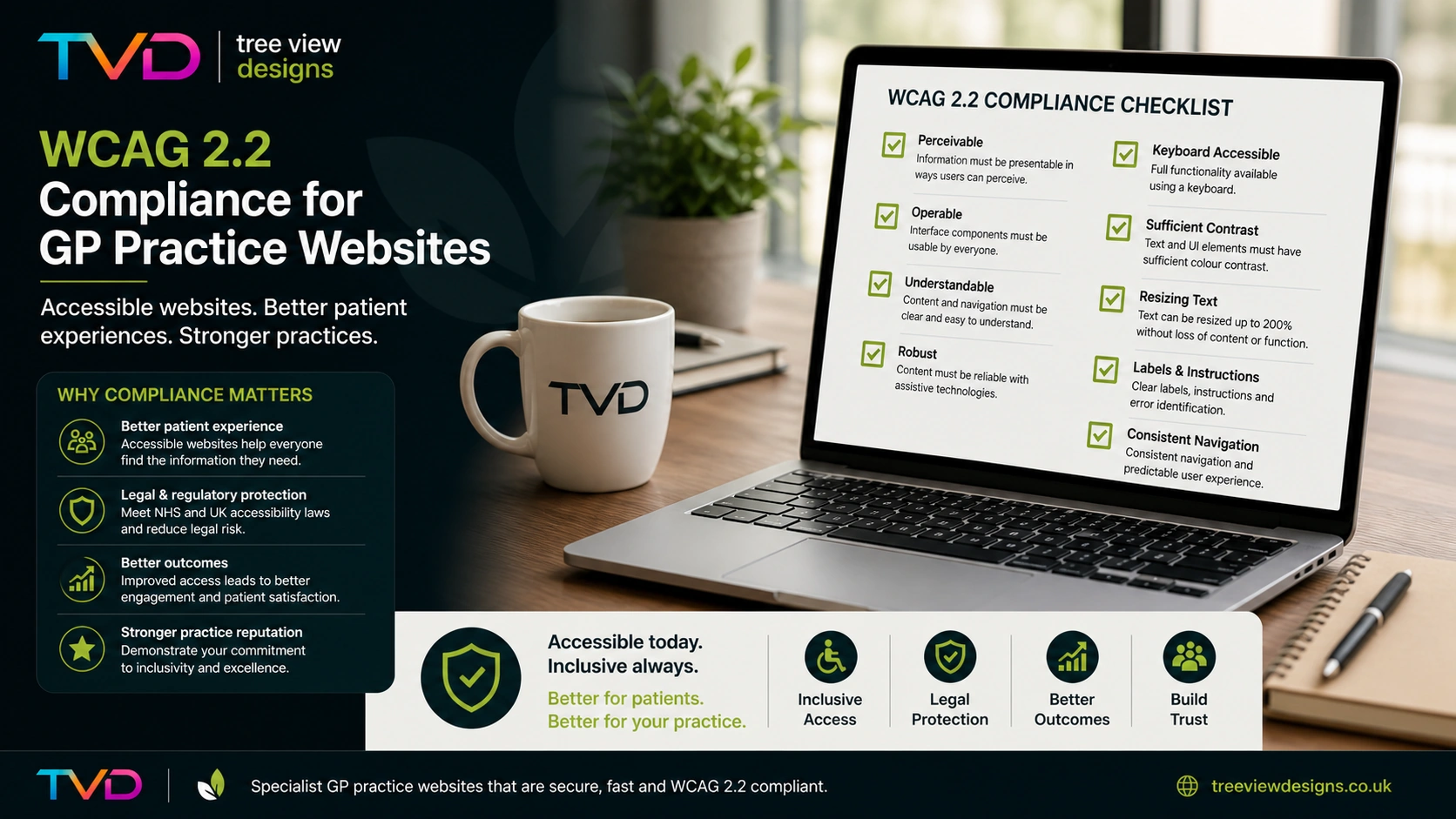
Start with WCAG 2.2 and the practical barriers patients can encounter, including navigation, forms and content. An automated score alone cannot tell you whether every journey works.
Understand WCAG 2.2The Accessible Information Standard focuses on identifying and meeting individual communication needs. That is related to, but different from, making the website itself accessible.
Understand AIS and website accessibilityClear language helps people act on your information. Review long sentences, unfamiliar terms and vague instructions as well as the visual design.
Write clearer patient informationGo a little deeper
Does meeting the Accessible Information Standard mean adding more PDFs to your GP website? What practices actually need to do, and where website accessibility fits.
Every NHS GP practice website must meet WCAG 2.2 AA accessibility standards. This guide explains what changed in WCAG 2.2, where practices commonly fail, and how to achieve compliance.
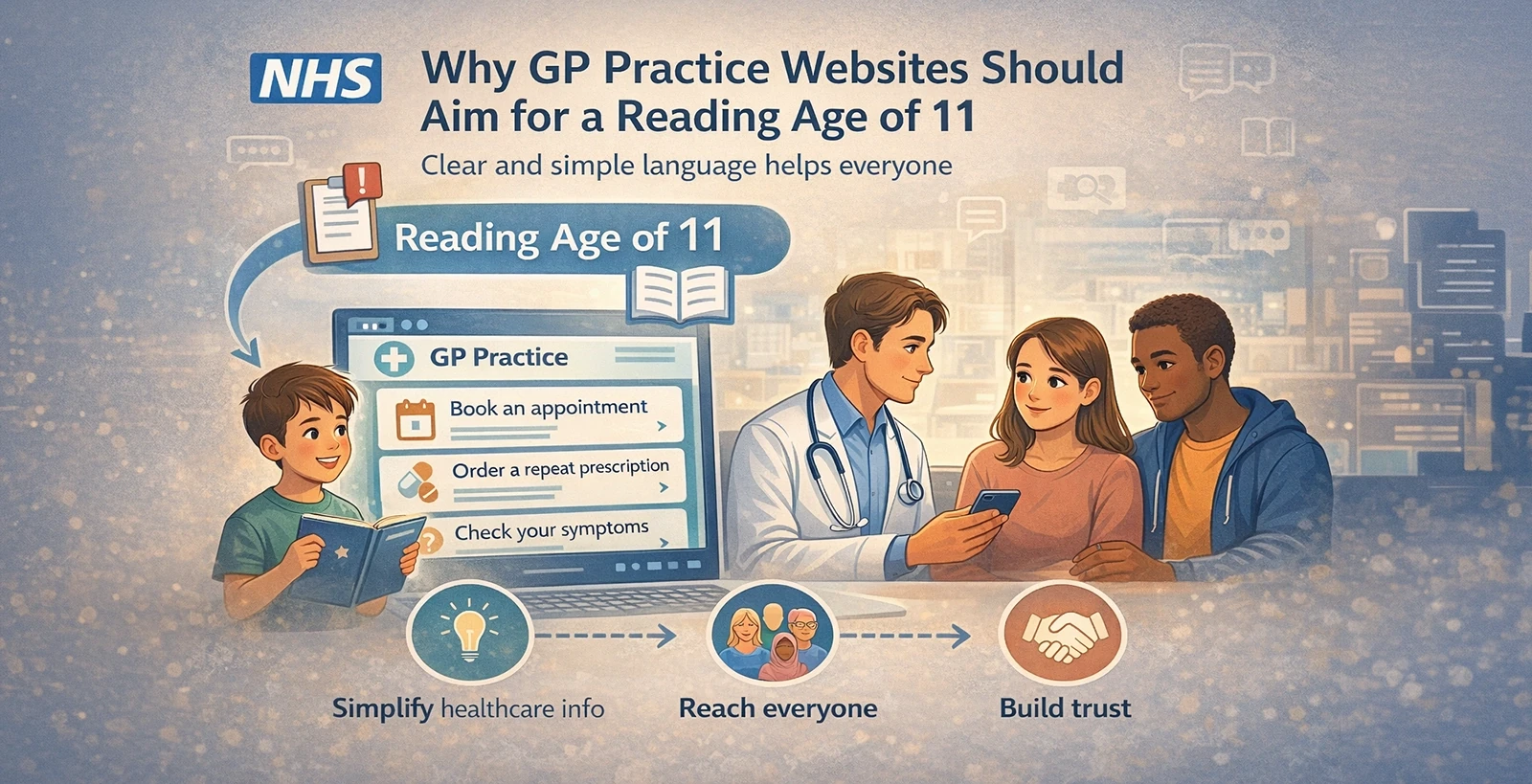
Aiming for an 11-year-old reading age isn't about treating patients like children. It's about inclusion, clarity, and making healthcare accessible to everyone.
Talk to the people who build and support them.