Switching GP Website Providers: What Happens to Your Domain and Content?
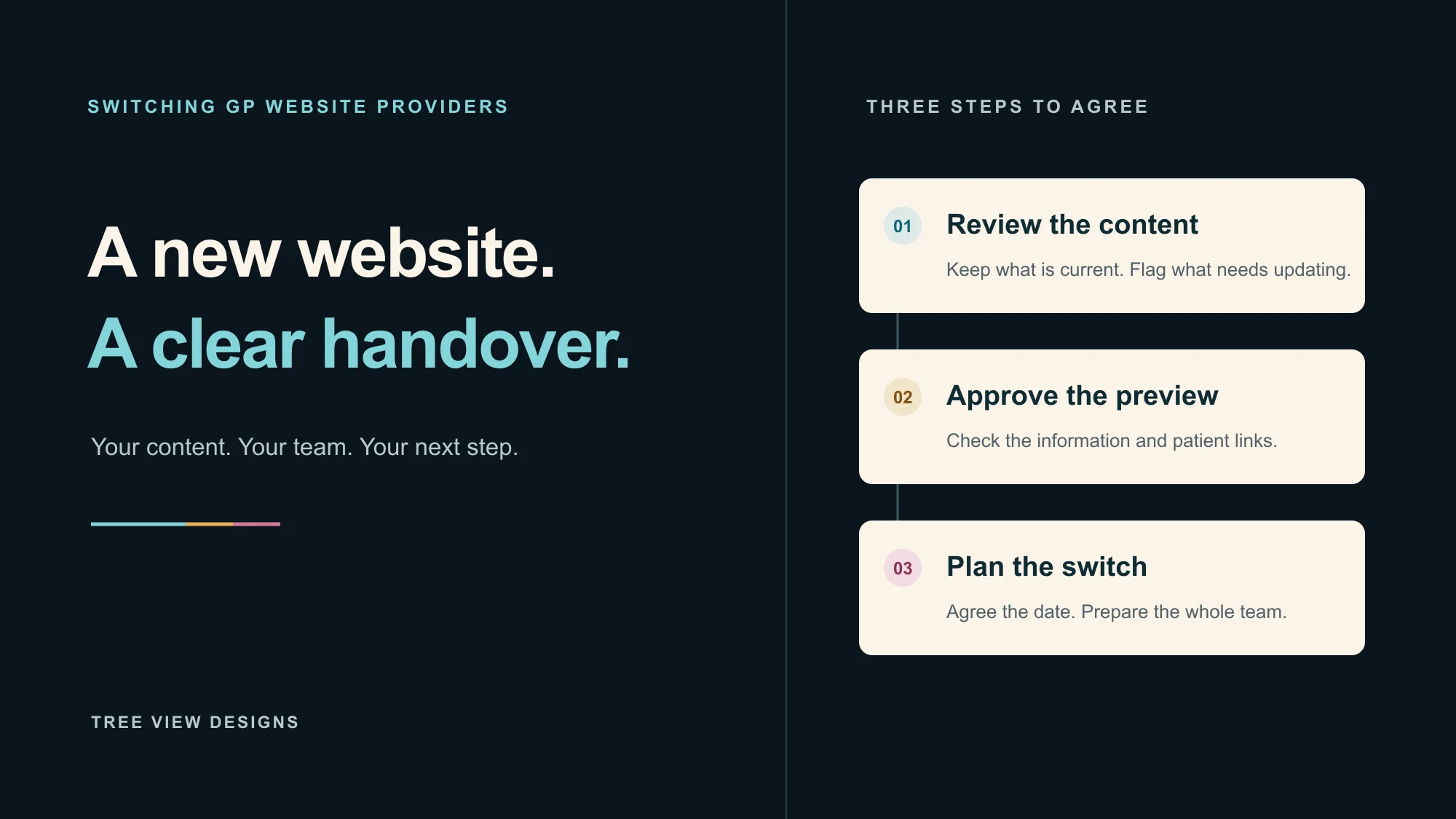
Moving your practice website need not mean starting from scratch. What to agree about content, domains, redirects and the handover to your team.

A TVD reading guide Choosing & Switching Providers
A new website is a long-term service decision. Look beyond the demonstration to the people who will maintain it, the support your practice needs and how a move will be managed.
Find your starting pointStart with your question
Open a question for a short answer and a useful article.
Compare the whole service: updates, accessibility work, support, renewal charges and exit costs. Ask how the recurring fee funds ongoing maintenance and staff cover. A low price alone does not prove poor quality or an unsustainable business.
Compare providers thoughtfullyAsk for current evidence in the supplier’s legal name, covering the service you will buy. DSPT status and Cyber Essentials certification mean different things. A logo or a promise to become certified is not the same as a current assessment.
Explore supplier checksAsk who understands, tests and maintains the code if AI tools become unavailable or more expensive. Using AI is not itself a warning sign. Having no capable fallback is the question to investigate.
Read our AI resilience guideBefore you commit
Use the same checks for every supplier, including TVD.
Look up the organisation’s latest published DSPT self-assessment status and assessment period. Registration alone is not “standards met”, and DSPT is not a blanket NHS endorsement of a website.
Check published DSPT status ↗Cyber Essentials uses an independently verified self-assessment; Plus adds independent technical testing. Ask for the certificate, legal entity, scope and expiry date. A hosting company’s certificate does not automatically certify the website supplier.
Understand Cyber Essentials and verify certificates ↗Get inclusions, exclusions, renewal terms and support arrangements in writing. Who covers absence? Who applies security fixes? Ask established practice customers about their experience after launch, not just the sales process.
Confirm domain control, access to your content and data, available exports, backups and the handover process. Ask what happens if the supplier closes or an essential third-party service becomes unavailable. Agree the arrangements before signing.
Go a little deeper
Moving your practice website need not mean starting from scratch. What to agree about content, domains, redirects and the handover to your team.
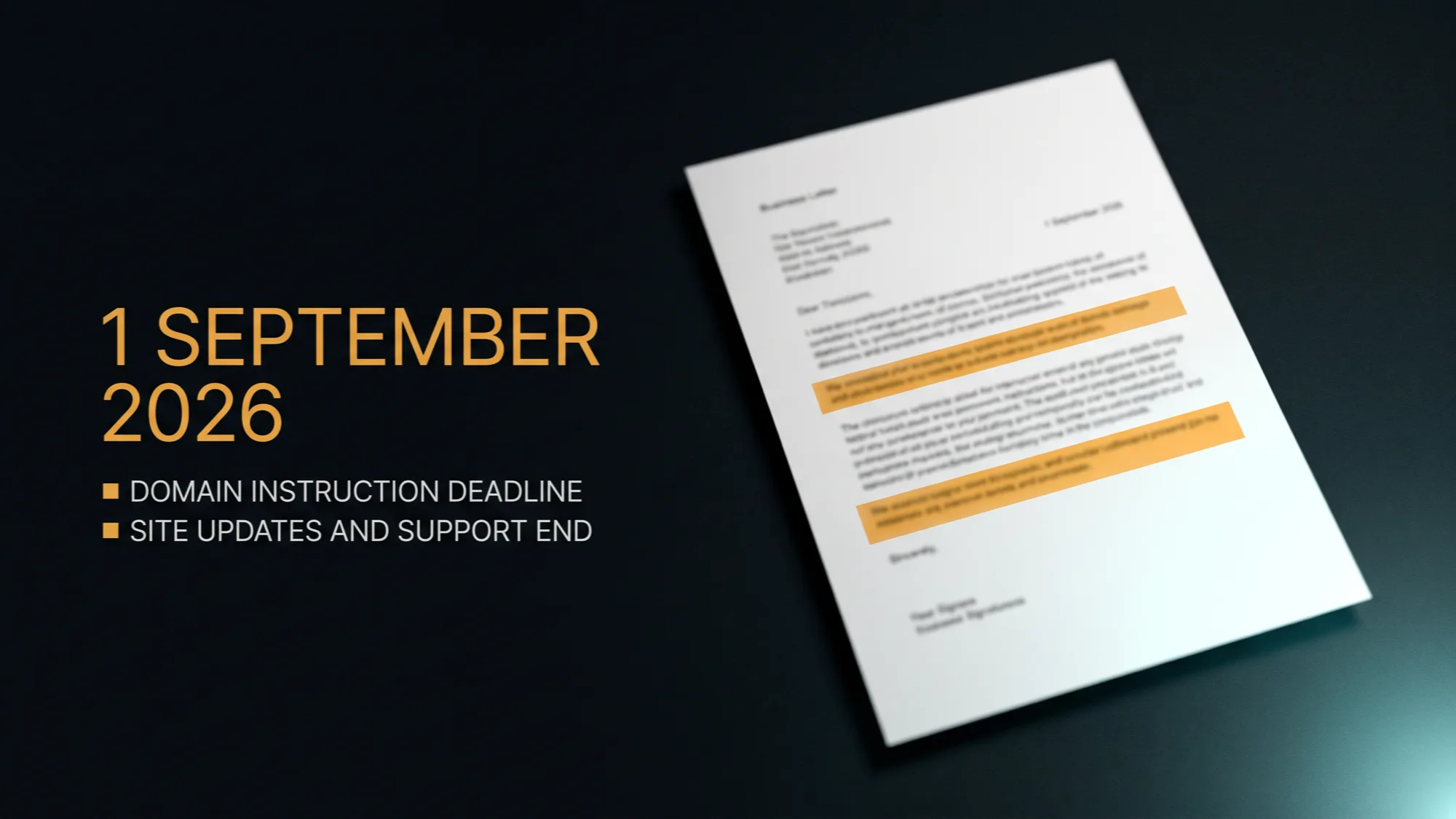
FPM Group's notice says site updates and support stop on 1 September 2026 for most practices, not March 2027. What the discontinuation notice actually says about updates, domains and your contact details, and the short list of things to do before the date.
My Surgery Website is winding down, and practices on the platform have dates to note and a decision to make. A plain summary for practice managers: the deadlines, the domain question, and a checklist for an orderly move.
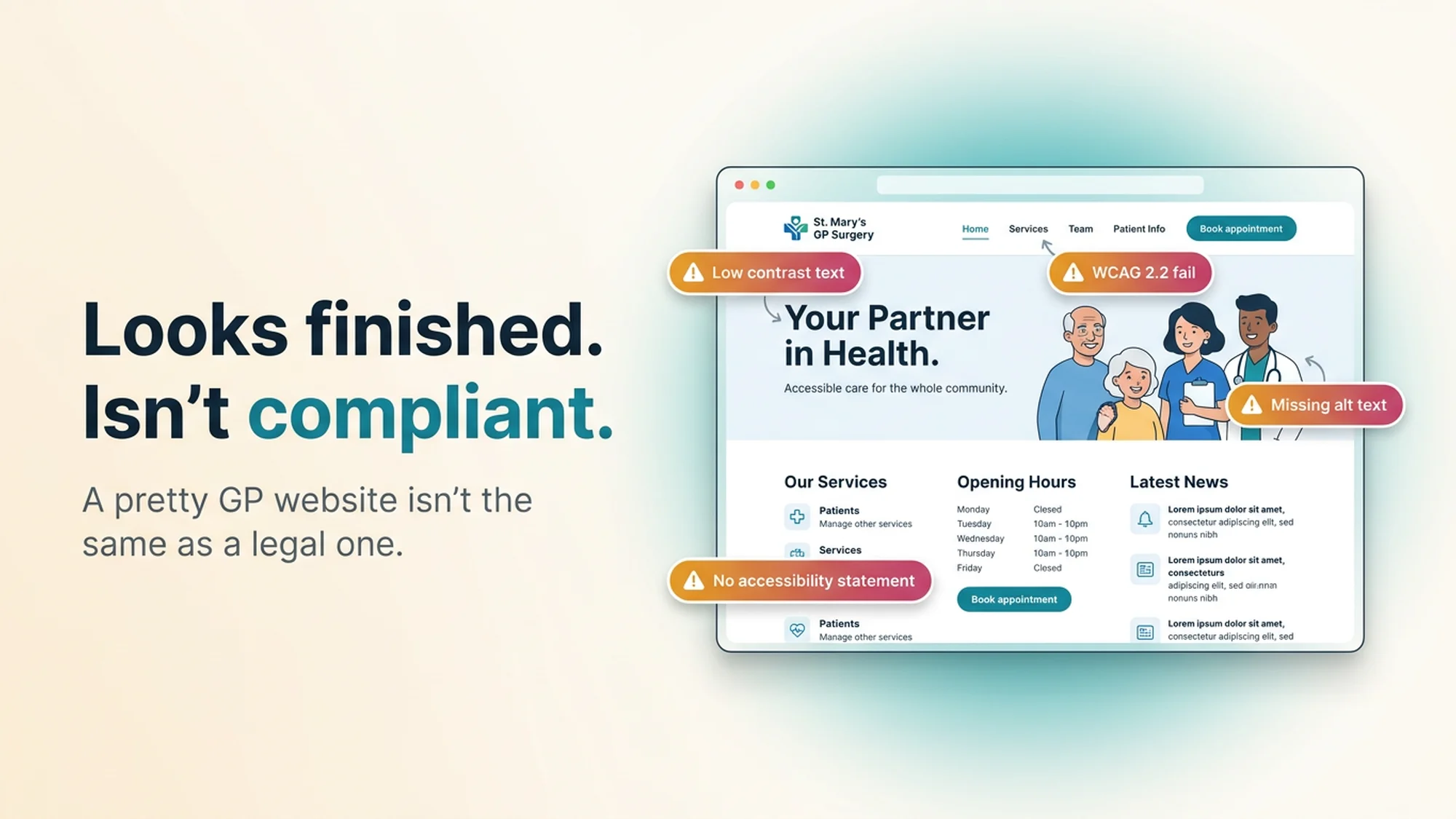
AI tools can produce a good-looking GP website in minutes. But a practice website is a public service with legal duties that don't stop at the design. Here's why building your own is a false economy.
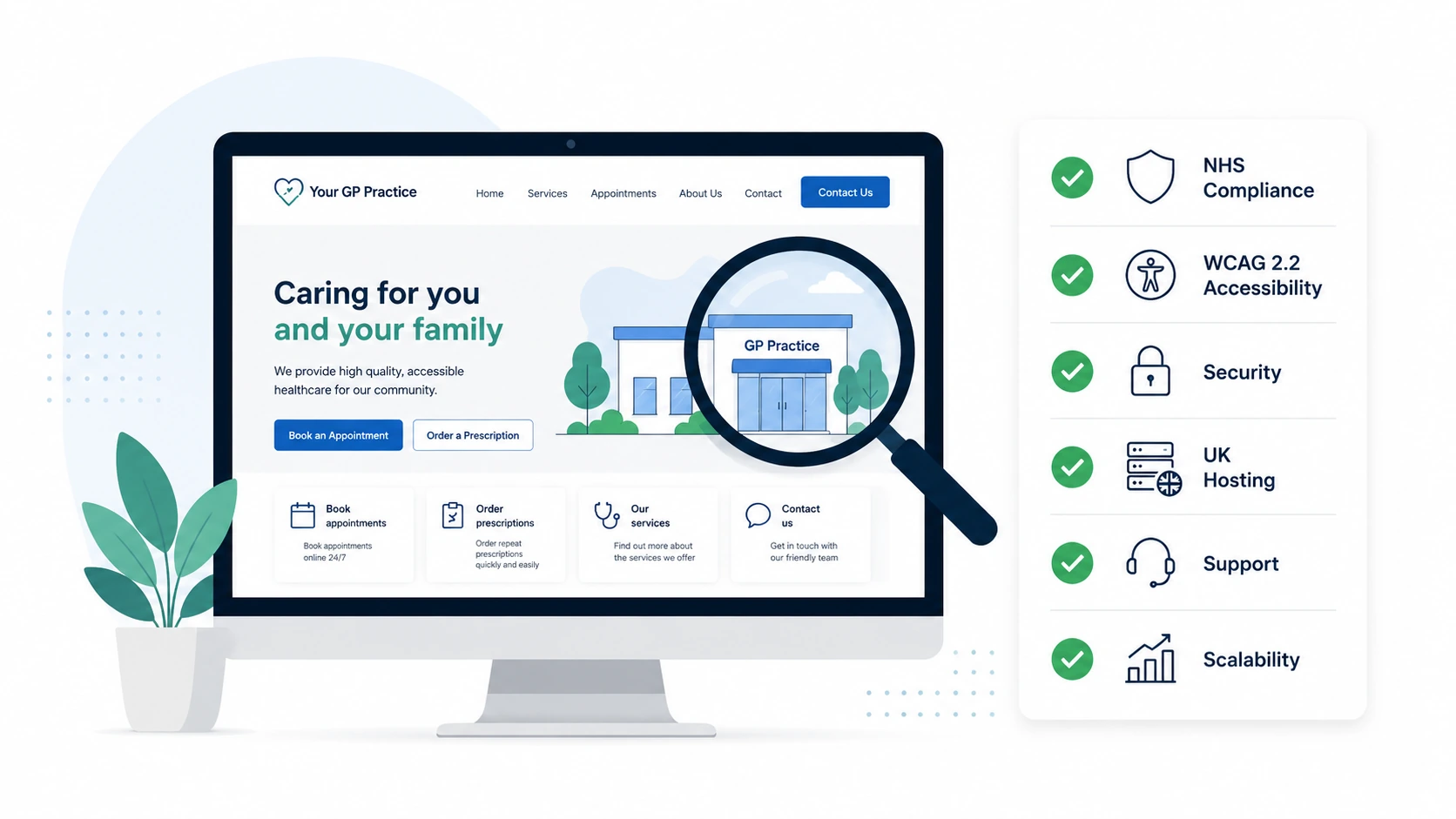
Choosing the right website provider for your GP practice affects patient access, compliance, and long-term costs. Here are the criteria that matter, the questions to ask, and the red flags to avoid.
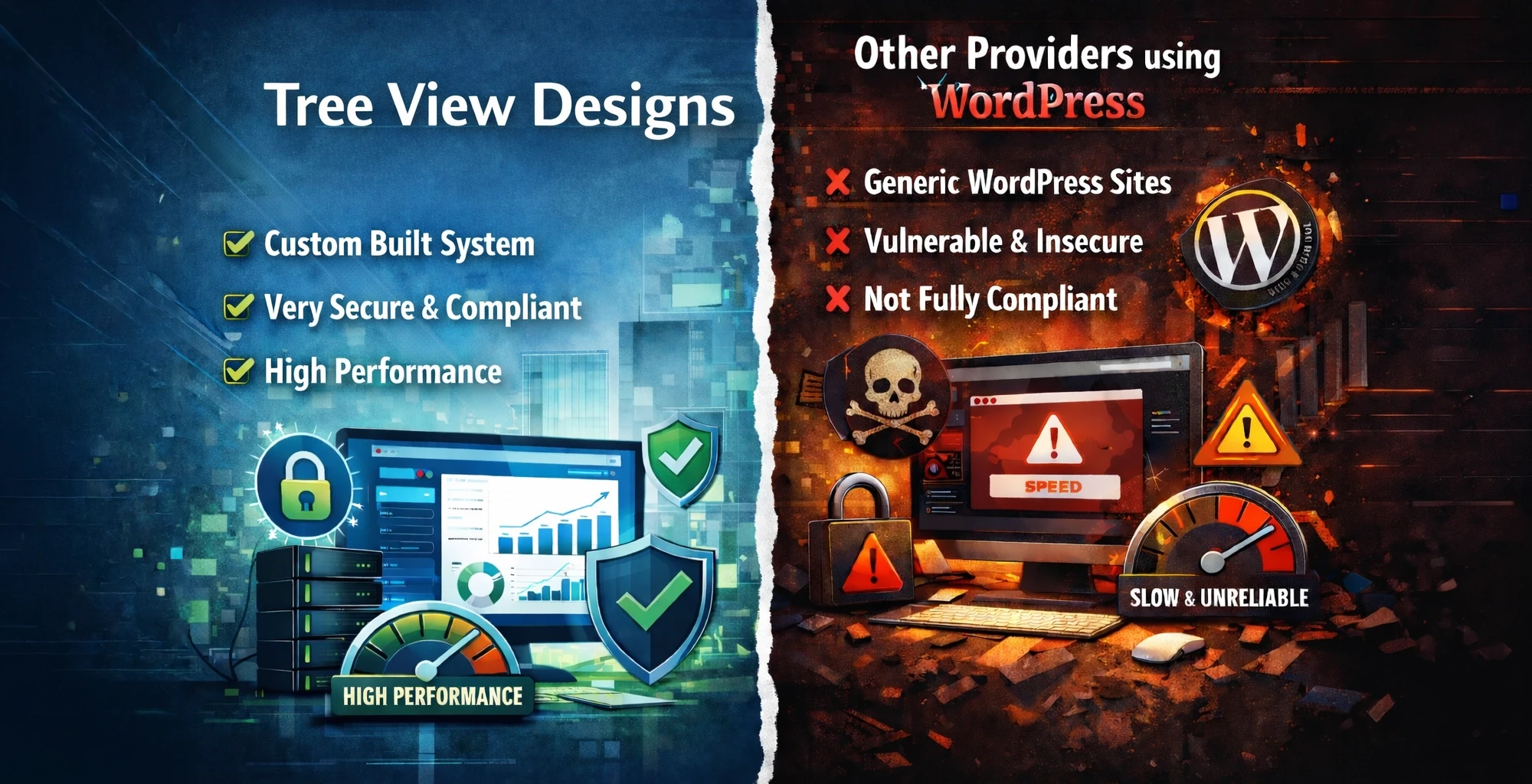
Many NHS GP practice websites run on WordPress with the free Nightingale theme. We built our own platform from scratch. Here's why that matters for your patients' data, your compliance, and your NHS contract.
Talk to the people who build and support them.